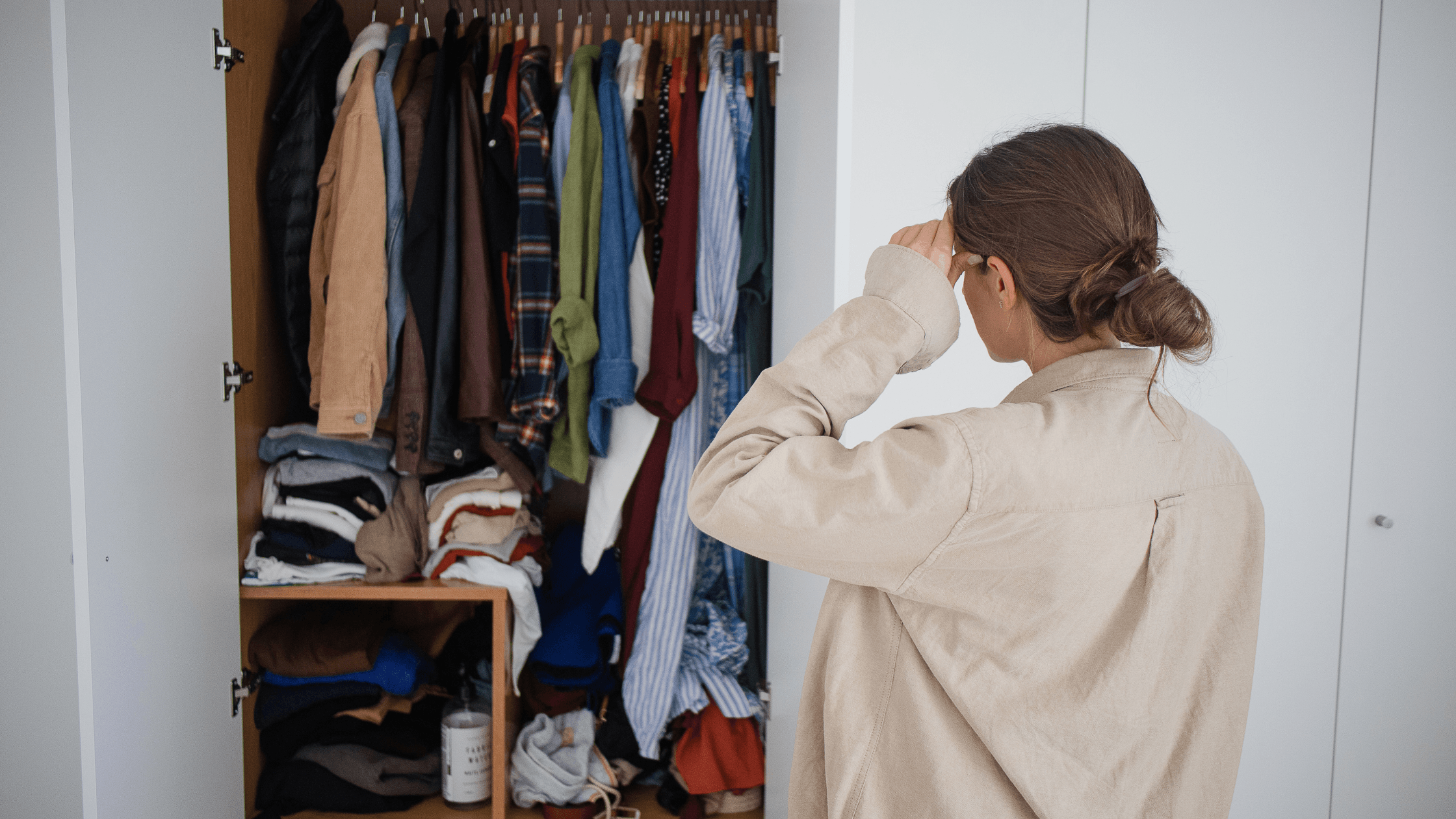
It’s one of those situations most of us know all too well. You open your wardrobe. Inside, there are shirts, blazers, sweaters, trousers, dresses, and T-shirts. You’re not short of clothes. Some of them are brand new. Others were bought for an important occasion. Some used to be your favorite pieces. And yet, the familiar thought appears: “I have nothing to wear.” Paradoxically, the problem is very rarely a lack of clothes. Much more often, it’s something entirely different.
The problem doesn’t always start in your wardrobe
Over the years, we’ve become used to the idea that if an outfit doesn’t work, we simply need something new. A new shirt. New trousers. A new dress. A new jacket. That’s why so many people try to solve the problem by buying more. For a while, it works. There’s the satisfaction of a new purchase. A few weeks later, however, the situation often returns to where it started. The wardrobe becomes fuller and fuller, but everyday choices don’t become any easier. Believe me, until quite recently, I was stuck in that cycle too.
Why do we wear some clothes all the time?
Think about your wardrobe for a moment. You probably have a few pieces you reach for regularly. Clothes that make you feel good. Clothes that work for different occasions. Clothes you put on without thinking twice. Now think about the items that have been hanging in your wardrobe for months. They’re not damaged. They’re not too small. They haven’t gone out of fashion. And yet, you almost never choose them. Most of the time, that’s not a coincidence.
“Something just doesn’t feel right”
I hear this very often during consultations. Interestingly, people who say it usually can’t identify exactly what the problem is. They say: “Everything seems fine.” “It’s the right size.” “I like the color.” “It looked great in the photo.” And yet, once they put it on, something feels off. This is exactly the moment when it’s worth looking beyond size or current trends.
Why does the same cut look different on different people?
This question comes back again and again, especially when we try to recreate an outfit we found online. We see a piece of clothing on a model, an influencer, or someone whose style we admire. We buy a similar cut. After trying it on, however, the result is completely different. That doesn’t mean the garment is bad. It also doesn’t mean there is anything wrong with our body. Quite simply, every person has different proportions. And those proportions have an enormous impact on how clothes are perceived.
The most expensive shopping mistakes aren’t always about the price
Many people believe that a bad purchase is an expensive one. Not always. Often, the most expensive clothes are the ones we never wear, regardless of whether they cost one hundred or one thousand. If a garment spends most of its time sitting in your wardrobe, it isn’t contributing to your wardrobe. It doesn’t help create outfits. It doesn’t bring satisfaction. It simply takes up space and reminds you of another shopping decision that didn’t deliver the result you hoped for.
Fashion gives you inspiration, but it doesn’t know your body
This is one of the most important things to realize. Social media is full of inspiration. It’s a great source of ideas. I use Pinterest myself when I’m looking for new inspiration. The problem begins when we start treating these images as ready-made instructions. A photo doesn’t tell the whole story. It doesn’t show the proportions of the person standing in front of the camera. It doesn’t show their individual body characteristics. It also doesn’t show how a particular garment behaves in movement. That’s why copying ready-made outfits doesn’t always produce the results we expect.
Are there clothes that suit everyone?
This question comes up more often than you might think. After all, we would all love to find a cut that always works. The reality, however, is more complex. People differ in height. Proportions. Body structure. The way they move. Their lifestyle. It’s difficult to expect one solution to work equally well for everyone. And that’s actually good news. The goal isn’t to find one universal garment. The goal is to find solutions that work specifically for you.
Why doesn’t a body shape analysis start with clothing size?
Many people associate body shape analysis with losing weight or trying to achieve certain measurements. That’s one of the most common myths. A body shape analysis has nothing to do with judging your body. Its purpose is to understand how clothing can create more harmonious proportions. How to make better shopping decisions. How to build a wardrobe that actually works in everyday life.
The biggest change usually isn’t about appearance
People who come for a consultation often expect a spectacular transformation. In reality, the most valuable change is usually much less dramatic. It’s greater awareness. Fewer random purchases. Fewer clothes bought on impulse. More decisions that actually make sense. And suddenly, choosing an outfit in the morning takes less time. Shopping stops feeling like a lottery. Your wardrobe begins to support your everyday life instead of making it more difficult.
If you have a full wardrobe and still nothing to wear...
...the problem probably isn’t the number of clothes you own. You may not need to buy more. Perhaps you need to better understand why some pieces work beautifully while others—despite the best intentions—never become part of your everyday wardrobe. Because a well-built wardrobe isn’t a collection of random clothes. It’s a collection of pieces that work together and with the person wearing them. And that’s usually where real change begins.
← Back to blog