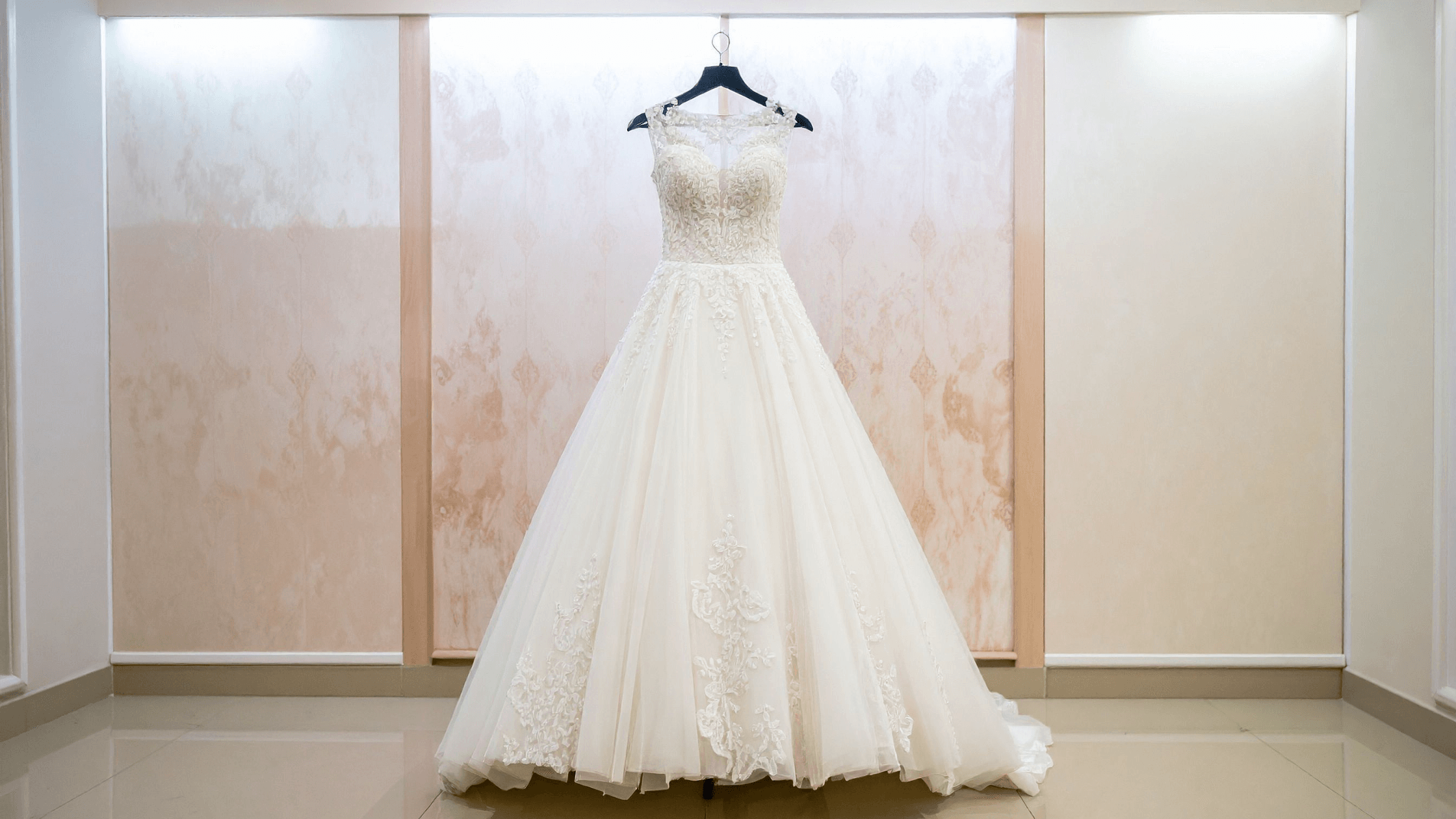
For many years, choosing a wedding dress seemed simple. The dress was supposed to be white. The whiter, the better. Today, the choice is much wider. There are ecru, ivory, cream, warm champagne tones, subtle pinks, and even delicate beige shades.
And that's when the question arises: Will every one of these colors look equally good on every bride? The short answer is no. And that's one of the most interesting things women discover when preparing for their wedding.
Myth number 1: A white wedding dress suits everyone
This is probably one of the most widespread beliefs about bridal styling. But white isn't just one color. Under the name "white wedding dress" there are dozens of different shades. Some are cool and luminous. Others are creamy and warm. Still others have a subtly softened character. Two dresses hanging next to each other may look almost identical. It's only when they are placed next to the face that you can see that one shade adds freshness to the complexion, while the other makes the face look more tired.
And that's exactly why choosing the color of your wedding dress shouldn't be random.
Myth number 2: Ecru is more elegant than white
This is another myth that regularly comes up when preparing for a wedding. Many people have heard that ecru looks more luxurious. More refined. Softer. The problem is that elegance doesn't come from the color itself. It comes from the harmony between your natural beauty and what you're wearing.
If a warm ecru shade complements the bride's natural coloring, the effect can be stunning. But if her coloring works better with cooler tones, the same color can make her face lose its freshness and radiance. That's why there is no single "most elegant" color for a wedding dress.
There is, however, a color that works best with each individual person.
Why do some women look stunning in ivory, while others look better in pure white?
The answer usually lies in their natural coloring. It influences how the colors closest to the face are perceived. Some people look wonderful in cool, luminous shades. Others gain much more from being surrounded by warmer tones.
Interestingly, many brides have been choosing clothes intuitively for years without realizing that they have specific color preferences. When it comes to choosing a wedding dress, this difference becomes particularly noticeable. After all, throughout the day, the guests' attention is focused primarily on the bride's face.
The dress is only the beginning
Many people focus solely on the color of the dress. Yet the accessories are equally important. Jewelry, the veil, hair accessories, makeup. Details that may seem less significant at first glance. And yet they are precisely what create the cohesion of the entire look.
Myth number 3: Gold is the only choice for a wedding
For years, there has been a belief that gold is more elegant, while silver is more versatile. In reality, both metals can look equally refined, as long as they complement the coloring of the person wearing them.
Some women literally come alive surrounded by cool, silvery tones. These are most often Winters and Summers. Others look significantly better in warm shades of gold, champagne, or delicate rose gold. This is where Springs and Autumns tend to shine.
The finish of the jewelry is equally important. Some color types benefit from shiny surfaces and crystals that reflect light. Others look more harmonious in satin, matte, or subtly brushed jewelry.
That's why two brides wearing almost identical dresses may need completely different accessories. And neither of them will look better or worse. Each will simply look her best in her own version of elegance.
Is the dress silhouette always more important than the color?
Most brides begin their search with the silhouette. Mermaid. A-line. Ball gown. Minimalist column. That's natural.
But what's interesting is that many people notice the face first and the dress itself only afterward. If the color doesn't complement your natural coloring, even the most beautiful silhouette may not create the effect you're hoping for. That's why the best results come when color and cut work together.
Myth number 4: An A-line or mermaid dress is always a safe choice
The internet loves ready-made answers. "This silhouette suits everyone." "This dress makes you look slimmer." "This cut is the most versatile." In reality, things are much more individual. Two women can try on the exact same silhouette and achieve completely different results. Not because one looks better than the other. Simply because every body has its own proportions.
That's why a body shape analysis before choosing a wedding dress can help you avoid costly mistakes and hours spent trying on dresses.
There's one more element that is rarely talked about
A wedding isn't a photo shoot. It's an event during which you are the center of attention for many hours. Your guests, photographer, videographer, family, and friends are all looking at you. That's why your bridal styling shouldn't just look good. It should also give you a sense of comfort and confidence. Because when you're not wondering whether you've chosen the right color, the right silhouette, or the right jewelry, you can focus on what's most important: experiencing the day.
How can you avoid doubts when choosing your wedding look?
Many brides visit bridal salons with hundreds of inspiration photos saved on their phones. The problem is that Pinterest doesn't know your natural coloring. Instagram doesn't know your body proportions. And a catalog doesn't know which colors make your face look its most radiant.
That's why more and more brides are choosing to have a color analysis, body shape analysis, and face shape analysis before selecting their wedding dress. This makes it much easier to assess whether a particular shade of white, dress silhouette, type of jewelry, or even hairstyle truly complements their natural features.
If you're preparing for your wedding together, it's worth looking at your styling more broadly. After all, it's not just about choosing a dress or a suit, but about creating a cohesive image for the bride and groom. That's why Quest Style created the Bride and Groom service, which combines color analysis, body shape analysis, and face shape analysis for both the bride and groom. This makes it easier to make decisions about clothing, accessories, jewelry, hairstyle, and even the overall character of the wedding look.
Because the most beautiful wedding dress isn't necessarily the one that looks best on a model.
The best bridal styling is one in which both the bride and groom look harmonious, natural, and, above all, feel like themselves on one of the most important days of their lives.
← Back to blog